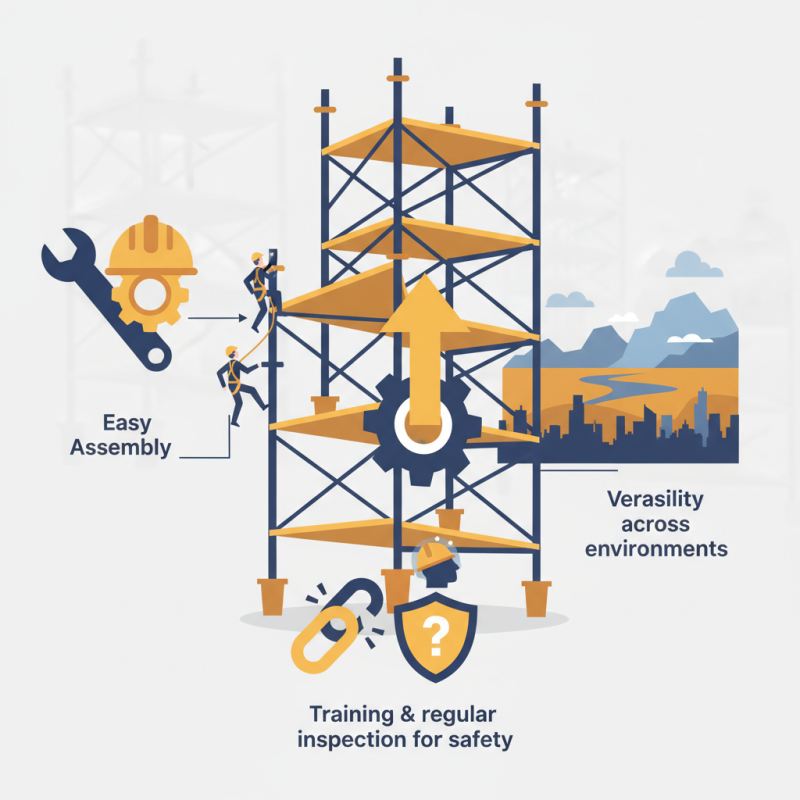
Kwikstage Scaffolding is a popular choice in the construction industry. Its design allows for versatility and safety on various projects. This modular system is easy to assemble and disassemble, making it effective for both small and large jobs.
Crafted for efficiency, Kwikstage Scaffolding features interlocking components. These elements provide strong support and stability. Workers can rely on it for secure access to elevated areas. The adaptability of this scaffolding system enables its use in different environments, from busy urban sites to remote locations.
Despite its benefits, some challenges exist. Users must be trained properly for assembly and use. Ignoring safety guidelines can lead to accidents. Regular inspections of the scaffolding are crucial to ensure its integrity. Understanding these aspects fosters a safer work environment and enhances project success.
What is Kwikstage Scaffolding? An Overview of Its Features
Kwikstage scaffolding is a highly efficient and versatile temporary structure used in construction and maintenance. Its modular design allows for easy assembly and disassembly, making it a popular choice among contractors. Kwikstage offers several key features, including a robust frame and strong platforms, which provide stability and safety for workers at various heights. According to industry reports, the global scaffolding market is expected to grow by 5% annually, highlighting an increasing reliance on safe, efficient support structures in construction.
One significant advantage of Kwikstage scaffolding is its adaptability. It can be used for residential, commercial, and industrial projects, accommodating different building shapes and sizes. The system comprises standardized components that fit together seamlessly, allowing rapid installation. However, challenges exist — one must ensure that the right components are selected to suit specific project requirements.
Tips for using Kwikstage scaffolding effectively: always conduct regular inspections to ensure that all components remain in good condition. Proper training should be provided to workers on assembly and safety practices. Additionally, keep in mind that the arrangement of scaffolding should comply with local regulations to prevent accidents. Miscommunication about project needs can lead to improper assembly, which is a common pitfall to avoid. Safety is paramount, and reflecting on these aspects can enhance both efficiency and security on the job site.
Key Components of Kwikstage Scaffolding System Explained
Kwikstage scaffolding is a robust, modular system widely used in construction projects. Its design allows for easy assembly and disassembly, making it a favorite among builders. The system comprises various key components that work together for optimal safety and efficiency.
The standards, or vertical posts, are the backbone of the Kwikstage system, providing essential support. Ledgers connect the standards horizontally, creating a stable platform. The transoms, which are cross members, allow for the support of boards or other working surfaces. Additionally, brace components ensure the structure’s rigidity, preventing swaying during use.
Tip: Always inspect components for wear or damage before use. A single compromised part can lead to serious safety hazards.
Another element is the base plates, which distribute the load and stabilize the standards. They should be placed on solid ground to maintain integrity. Properly assembling and securing each component is critical for safety. Remember, incorrect assembly can compromise the entire structure.
Tip: Use a checklist to verify all components before beginning assembly. This step can save time and prevent potential accidents.
Applications of Kwikstage Scaffolding in Construction Projects
Kwikstage scaffolding is extensively used in construction projects for its versatility and stability. It consists of steel frames, ledgers, and braces, making it easy to assemble and disassemble. This scaffolding system is ideal for both residential and commercial sites. Workers appreciate the safety features that come with Kwikstage, providing reliable support while working at heights.
In large-scale projects, such as high-rise buildings, the adaptability of Kwikstage is crucial. It can be tailored to fit different designs and elevations. The system allows for rapid assembly and dismantle, which can save time. Yet, not every project follows a smooth timeline. Sometimes, the complexity of a structure adds to the challenge of using Kwikstage efficiently.
Moreover, Kwikstage scaffolding can be used in renovation projects. Older buildings often present unique challenges. The ability to modify and adjust the scaffolding to fit irregular shapes is vital. However, workers must be trained properly to utilize the system safely. Misunderstandings during assembly can lead to safety risks. Awareness and training in proper setup are essential to maximize its benefits. Without this diligence, even the most reliable systems can fall short.
Safety Standards and Regulations for Using Kwikstage Scaffolding
Kwikstage scaffolding is widely recognized for its robust design and versatility. But while its construction is durable, adhering to safety standards is crucial. Research from the Occupational Safety and Health Administration (OSHA) reveals that nearly 65% of construction site accidents are related to scaffolding failures. This statistic underscores the importance of strict adherence to safety regulations.
When using Kwikstage scaffolding, following guidelines set by safety organizations is essential. Workers should inspect scaffolding before use, ensuring that all components are correctly assembled. A study by the National Institute for Occupational Safety and Health (NIOSH) found that compliance with safety protocols reduces the risk of falls by 29%. Additionally, proper training in scaffold use helps workers understand potential hazards, thus ensuring safe operations.
Despite the advantages, challenges remain. Many workers may not follow safety protocols consistently. This can lead to dangerous situations on site. Regular training and assessments are necessary, but often neglected. Reflecting on these gaps can improve safety compliance and reduce the risk of accidents. The effectiveness of safety measures largely depends on the commitment of both employers and employees.
Industry Trends: Adoption Rates and Market Insights for Scaffolding Solutions
The scaffolding industry has seen significant changes in recent years. Adoption rates for advanced scaffolding solutions have increased. Construction companies are prioritizing safety and efficiency. Kwikstage scaffolding exemplifies this trend with its easy assembly and disassembly. Many contractors appreciate its flexibility on various project types. Interest in innovative scaffolding is growing.
Market insights reveal a shift towards modular and lightweight materials. These options reduce construction time and labor costs. However, not all companies embrace these changes. Some prefer traditional methods, citing reliability. The challenge lies in balancing innovation with proven practices.
Research indicates that many projects underutilize scaffolding's benefits. Proper training and planning can enhance safety. Yet, some workers still overlook best practices. This oversight can lead to accidents. The need for a culture of safety within construction is more pressing than ever. Solutions must address these gaps to ensure a safer working environment for all.
What is Kwikstage Scaffolding and How is it Used? - Industry Trends: Adoption Rates and Market Insights for Scaffolding Solutions
| Dimension |
Data |
| Material Type |
Galvanized Steel |
| Maximum Load Capacity |
450 kg per square meter |
| Applications |
Construction, Maintenance, and Industrial Projects |
| Adoption Rate in Construction |
35% in 2023 |
| Market Growth Rate |
7% CAGR projected for 2024-2029 |
| Key Benefits |
Versatility, Durability, Quick Assembly |
| Safety Features |
Anti-slip platforms, Guardrails, Load indicators |
FAQS
: Key components include standards, ledgers, transoms, braces, and base plates. Each contributes to stability and safety.
Standards are vertical posts that provide essential support. They are crucial for the structure's integrity.
Ledgers connect standards horizontally. They create a stable platform for workers and materials.
Base plates distribute the load and stabilize the standards. They must be placed on solid ground.
Inspect all components for wear or damage. A compromised part can lead to serious safety hazards.
Proper assembly is critical for safety. Incorrect setup can compromise the entire structure.
Yes, it can adapt to fit irregular shapes of older buildings. Proper training is essential for safety.
Absolutely, its adaptability is crucial in large-scale projects. However, complexities can challenge efficiency.
Use a checklist to verify all components. This step can save time and prevent potential accidents.
Misunderstandings can lead to safety risks. Awareness and training are vital to maximize benefits.
Conclusion
Kwikstage Scaffolding is a versatile and robust scaffolding system widely used in the construction industry. Its features include modular components that allow for easy assembly and disassembly, making it time-efficient on job sites. Key components of the Kwikstage system include standards, ledgers, and transoms, which together form a stable support structure for various construction tasks.
The applications of Kwikstage Scaffolding are extensive, ranging from residential building projects to large-scale commercial constructions. Safety standards and regulations are critical in its implementation, ensuring user protection and compliance with industry best practices. Recently, the adoption rates of Kwikstage Scaffolding have been on the rise, reflecting a growing trend toward efficient, reliable scaffolding solutions in the construction market.

 AJ Metal